The Curious Case of '罗素' vs. '拉塞尔': A Deep Dive into Chinese Name Translation
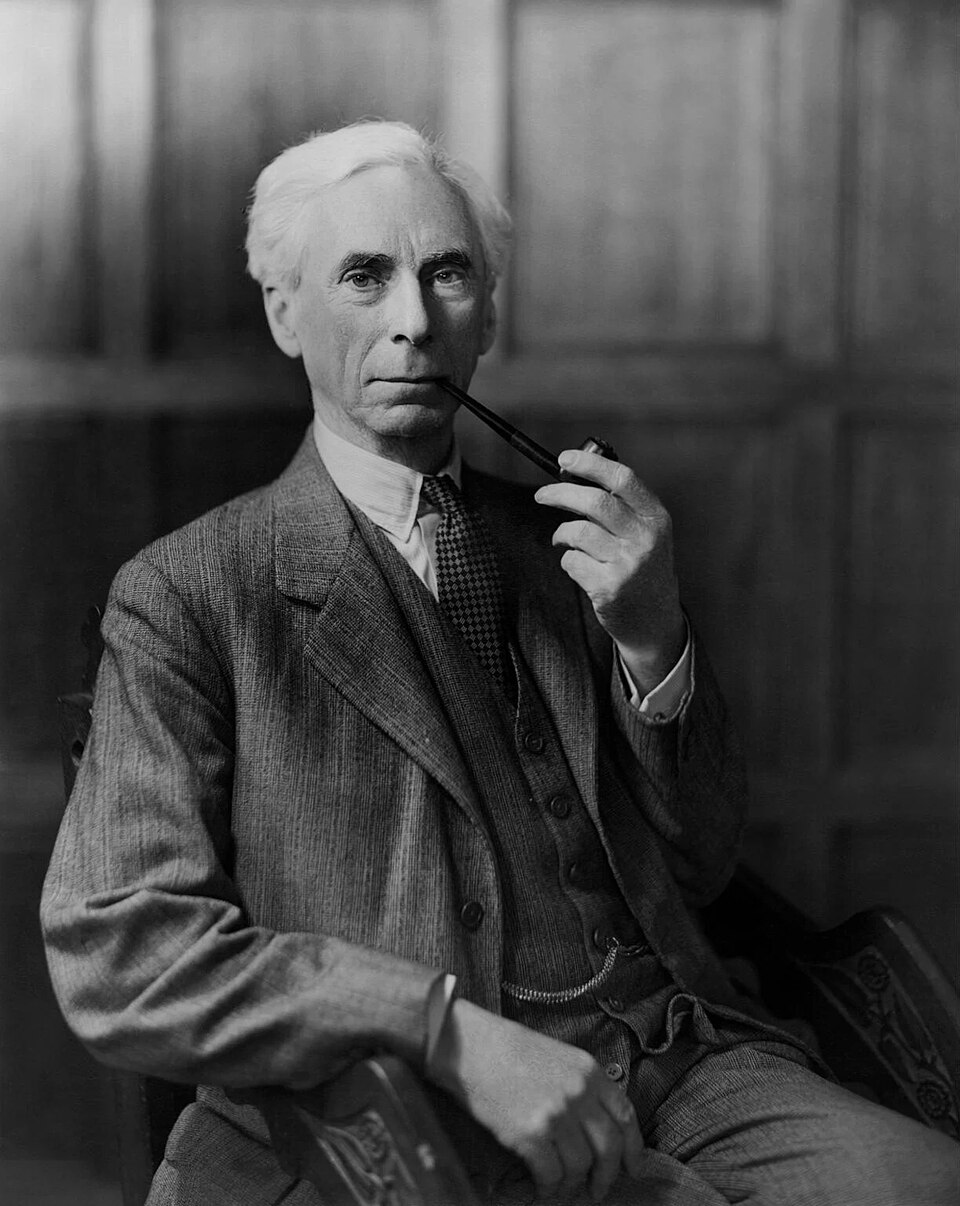
The world of Chinese name translation is a rich tapestry woven with threads of history, culture, and linguistic evolution. Few puzzles illustrate this complexity as perfectly as the divergent Chinese renditions of the name "Russell." Why is it that the venerable British philosopher Bertrand Russell is known as '罗素' (Luósù), while basketball legend Bill Russell, actor Russell Crowe, and countless others are consistently referred to as '拉塞尔' (Lāsài'ěr)? This apparent inconsistency isn't a mere oversight; it's a fascinating window into the dynamic principles that have governed cross-cultural communication in China over the past century.
At its heart, this distinction highlights the profound impact of historical context and the prevailing translation philosophies of different eras. It's a story of how some names, by virtue of their early arrival and the influence of their first translators, have "won the race" for cultural permanence, securing a unique place in the Chinese lexicon.
The Dawn of Translation: Bertrand Russell and the Enduring Legacy of '罗素'
To understand the '罗素' phenomenon, we must journey back to the early 20th century. Bertrand Russell, the celebrated polymath and Nobel laureate, visited China in 1920, delivering influential lectures that captivated intellectuals across the nation. It was around this pivotal time that the Shanghai Commercial Press began publishing the "罗素丛书" (Russell Series), marking one of the earliest and most significant introductions of his work to Chinese readers. This initial translation, '罗素', became deeply embedded in the nascent academic and intellectual circles.
The translation philosophy of that era, particularly during the Republic of China (early 20th century), was often guided by the principle of "信达雅" (xìn dá yǎ) – fidelity, expressiveness, and elegance. While modern translation prioritizes phonetic accuracy (信 – fidelity to sound), the "雅" (elegance, cultural resonance, and even intellectual aesthetic) held significant sway in early translations. Translators of the time, often scholars themselves, aimed to imbue translated names with a certain gravitas or literary feel. '罗素', with its two simple, elegant characters, arguably conveyed a more refined and intellectual aura compared to the longer, more phonetically direct '拉塞尔'. This initial, influential choice ensured that
Russell vence corrida – Bertrand Russell's name translation effectively "won the race" for widespread adoption and became the standard, almost sacred, rendition in academic discourse.
Once an authoritative translation gains traction, especially within influential academic circles, it becomes remarkably resistant to change. Scholars, for the sake of consistency and ease of reference, tend to adhere to the established nomenclature. This academic inertia ensures the longevity of such early translations, even if subsequent linguistic analyses might suggest a more phonetically accurate alternative.
A Glimpse into the Past: Yan Fu and John Stuart Mill's '穆勒'
The story of Bertrand Russell isn't an isolated incident; it's part of a broader historical pattern. A compelling parallel can be found in the translation of another British philosopher, John Stuart Mill. His works were first introduced to China by Yan Fu, a towering figure in late Qing Dynasty and early Republican intellectual circles, renowned for his rigorous and often idiosyncratic translation style. Yan Fu translated Mill's name as '穆勒' (Mùlè).
Despite phonetic deviations from the original English, Yan Fu's profound influence cemented '穆勒' as the standard translation for decades. His translation of Mill's seminal work "On Liberty" as 《群己权界论》 (Qún Jǐ Quán Jiè Lùn – "On the Boundaries Between the Group and the Self") rather than a literal "On Freedom" further illustrates this philosophy: a focus on conveying the essence and intellectual depth, even if it meant diverging from direct translation. As noted by translator Meng Fanli in his 2011 edition of Mill's "On Liberty," choosing '穆勒' was an act of reverence for Yan Fu's foundational work and its deep cultural impact.
This example clearly demonstrates how early, influential translations, particularly those by prominent figures like Yan Fu, established precedents that were difficult to overturn. The widespread acceptance of '穆勒' (even appearing in the Chinese Britannica and various academic texts) highlights how translation isn't just about sound; it's about cultural legacy, intellectual authority, and the desire to honor historical contributions. Interestingly, after 1949, a new translation, '密尔' (Mì'ěr), emerged, perhaps reflecting new linguistic guidelines or a conscious effort to break from older traditions. However, '穆勒' continues to be used alongside it, illustrating the enduring power of historical translations. To learn more about how names evolve, consider reading
Chinese Name Translation: The Evolution of 'Russell' Over Decades.
The Modern Era: '拉塞尔' and Evolving Translation Principles
Fast forward to the latter half of the 20th century, particularly after China's reform and opening-up in the late 1970s. The influx of Western culture—Hollywood films, global sports, popular music—brought with it a torrent of new foreign names. The translation landscape had shifted dramatically. The emphasis moved away from the "雅" (elegance) of the "信达雅" principle towards a stronger adherence to "信" (fidelity to sound).
Translators began to prioritize phonetic accuracy and standardization. This was driven by several factors:
1. **Mass Influx:** The sheer volume of new names required a more systematic and less subjective approach.
2. **Global Integration:** A desire for clearer, more universally recognizable translations to facilitate international communication.
3. **Technological Advancements:** Better access to original pronunciations and more standardized phonetic transcription systems.
Thus, when figures like NBA star Bill Russell or actor Russell Crowe entered the Chinese public consciousness, the prevailing translation norms dictated a closer phonetic rendering: '拉塞尔' (Lāsài'ěr). This translation directly reflects the syllables of "Russell" more accurately than '罗素'. It's a pragmatic and precise approach, designed for clarity and ease of understanding for a broad audience. This move towards standardization is a critical aspect of
Beyond Phonetics: Culture's Role in Translating Western Names.
Beyond Phonetics: The Cultural Nuances of Name Translation
The contrasting translations of "Russell" beautifully illustrate that name translation is never a purely mechanical process. It’s a culturally imbued act, reflecting not only linguistic shifts but also societal values and priorities. The choice of '罗素' for Bertrand Russell was arguably a conscious one, intended to bestow upon the revered philosopher a name that sounded scholarly and fitting for a thinker of his stature. It was a time when Western knowledge was being eagerly absorbed, and the presentation of a foreign intellectual was carefully curated.
For modern-day celebrities and public figures, the translation '拉塞尔' serves a different purpose: clear identification and accessibility for a mass audience. There's no longer the same cultural imperative to "ennoble" a name through translation; rather, the goal is straightforward recognition.
This historical evolution offers crucial insights for anyone grappling with cross-cultural communication:
* **Acknowledge History:** When encountering older translations, understand they may stem from different linguistic philosophies.
* **Seek Context:** The 'why' behind a translation is often as important as the 'what'.
* **Be Mindful of Influence:** Early, authoritative translations often possess remarkable staying power.
In essence, '罗素' and '拉塞尔' are not conflicting translations but rather artifacts of different historical moments and cultural expectations. They remind us that language is a living entity, constantly adapting and evolving, with each translation carrying a unique historical and cultural fingerprint.
Conclusion
The tale of '罗素' versus '拉塞尔' is a captivating linguistic journey through China's engagement with the Western world. It underscores how early cultural gatekeepers and their translation philosophies could profoundly shape the lexical destiny of foreign names. Bertrand Russell's '罗素' is a testament to the "elegance" principle of early 20th-century translation, an influential rendition that firmly "won the race" for permanence. In contrast, the '拉塞尔' of today reflects a modern commitment to phonetic accuracy and standardization, born from an era of globalized information flow. Ultimately, these two distinct translations for the same Western name serve as a powerful reminder of the rich, dynamic interplay between language, history, and culture that continues to define China's linguistic landscape.